


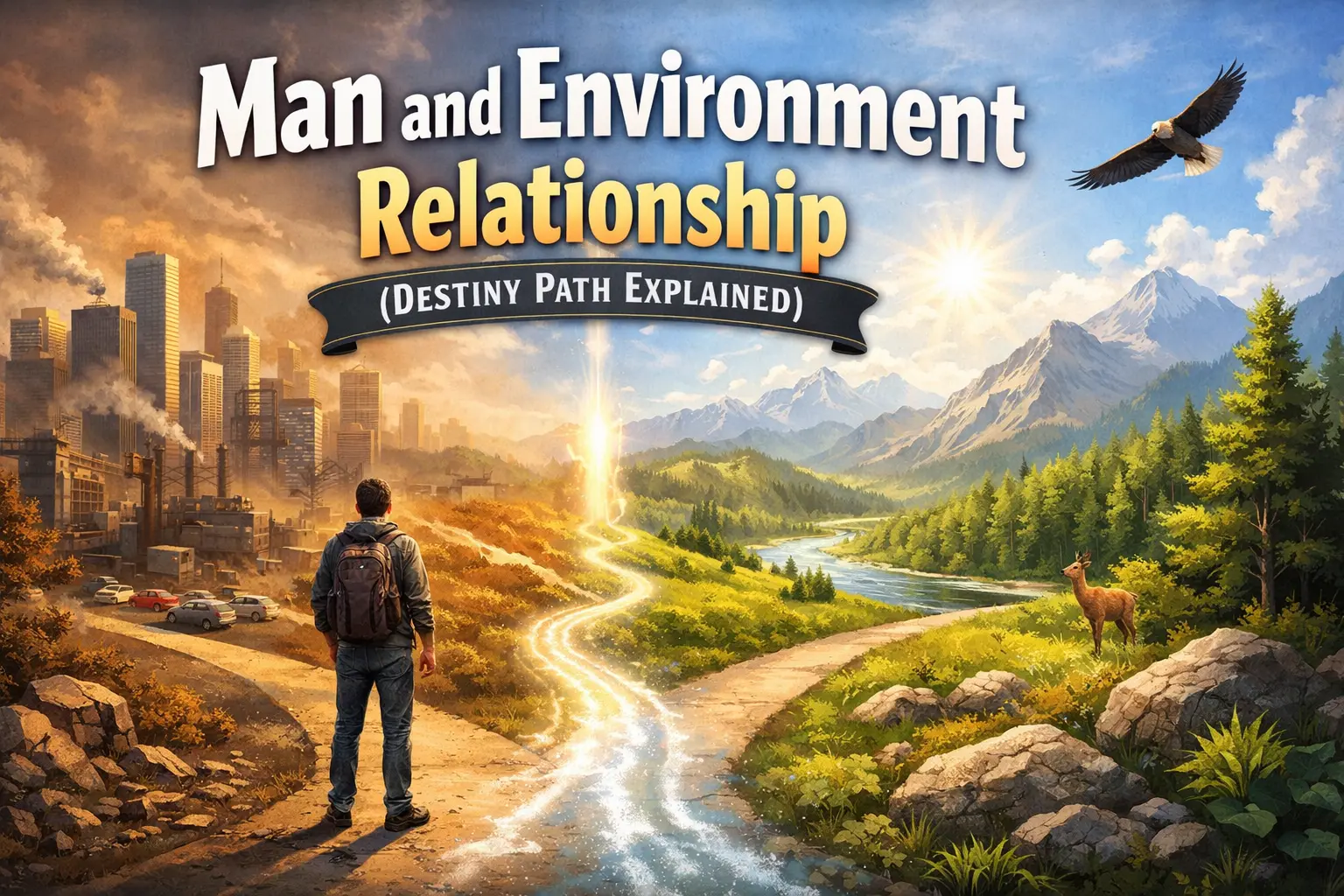
The relationship between man and the environment has become a defining factor in modern civilization. Rapid industrialization, urban expansion, and population growth have intensified the interaction between humans and natural systems. Today, understanding this relationship serves as a critical framework for sustainable living and responsible decision-making.
Human actions influence ecosystems, climate stability, and resource availability, making the man and environment relationship essential for health, livelihoods, and societal resilience. Every choice, from energy consumption to urban planning, strengthens or weakens the interconnected web of life. Recognizing these connections ensures that environmental stewardship remains a priority rather than a reactive effort.
Viewed through the lens of the Destiny Path, the man and environment relationship represents a structured system of cause and effect. Every behavior, policy, and habit contributes to a pattern that shapes present conditions and future outcomes. Ongoing environmental challenges demand heightened awareness, disciplined action, and coordinated responsibility across generations.
Understanding the Foundations of Man and Environment Relationship
Conceptualizing the Interconnection
The man and environment relationship serves as an ongoing dynamic where human actions and natural systems continuously influence each other. Environmental stability depends on the responsible management of resources, pollution, and biodiversity.
Users must recognize that human well-being and ecological health are inseparable. A disruption in one area inevitably affects the other, demonstrating the interconnectedness of these systems. Understanding this framework strengthens decision-making at all levels of society.
Natural Systems as Support Structures
Soil, water, air, forests, and wildlife function as essential support layers for human existence. Damage to one layer reverberates through the system, affecting health, food security, and climate.
Individuals should treat natural systems as structural foundations rather than disposable resources. Protecting these layers ensures resilience and long-term stability.
Human Influence and Responsibility
Human activities—from industrial production to urbanization—directly impact environmental balance. This influence demands accountability and deliberate action to maintain equilibrium.
Everyone needs to adopt a mindset of stewardship, recognizing that sustainable behavior strengthens both societal and ecological systems.
Daily Life Impacts and Environmental Integration
Health Implications of Environmental Change
Environmental quality significantly affects physical and mental health. Polluted air increases respiratory issues, while contaminated water compromises immunity.
Responsible management of the environment ensures preventive health benefits. Users must integrate practices that minimize exposure to environmental hazards and enhance well-being.
Economic Interdependence with the Environment
Economic systems rely on natural resources. Resource depletion, pollution, or mismanagement weakens economic stability.
Individuals should adopt practices that conserve energy, reduce waste, and promote sustainable consumption. Economic resilience strengthens when environmental considerations are prioritized.
Urbanization and Environmental Design
Cities concentrate human activity and environmental stress. Proper planning and green infrastructure reduce ecological strain.
Essential urban practices:
- Incorporating green spaces for air quality improvement
- Implementing efficient public transport systems
- Promoting waste management and recycling
- Using renewable energy sources in infrastructure
Behavioral Practices for Strengthened Relationships
Sustainable Lifestyle Habits
Everyday behavior influences environmental outcomes. Conserving water, reducing waste, and mindful consumption are critical.
Consistent habits strengthen collective impact. Individuals must treat personal routines as integral parts of environmental responsibility.
Food and Resource Management
Dietary choices and resource usage directly affect ecological balance. Local sourcing and reduced consumption minimize strain.
Key practices:
- Reducing meat and processed food consumption
- Supporting local and sustainable agriculture
- Efficient storage and minimal food waste
- Conscious water use during cooking and cleaning
Household and Personal Energy Management
Homes are primary points of environmental interaction. Energy efficiency and resource optimization strengthen overall balance.
Everyone needs to implement energy-efficient appliances, smart lighting, and responsible water heating systems.
Technology and Environmental Alignment
Smart Tools for Monitoring and Efficiency
Technology strengthens environmental oversight. Smart meters, automation, and monitoring systems optimize resource usage.
Users must adopt tools that enhance sustainability rather than promote dependency. Efficient technology ensures measurable impact.
Clean Energy Solutions
Renewable energy reduces carbon emissions and dependence on finite fuels. Solar, wind, and hybrid systems represent actionable solutions.
Key technological solutions:
- Solar and wind energy adoption
- Smart home energy management
- Electric and hybrid mobility
- Controlled resource monitoring systems
Managing Electronic and Industrial Waste
Proper disposal of electronic and industrial waste prevents soil, water, and air contamination. Recycling and safe handling strengthen system resilience.
Individuals should follow responsible disposal protocols to minimize long-term environmental impact.
Community Engagement and Policy Implementation
Collective Responsibility
Environmental protection strengthens when communities act together. Local initiatives, awareness campaigns, and shared responsibility amplify outcomes.
Everyone needs to participate in community-driven programs to maintain systemic balance.
Supporting Policy and Regulatory Measures
Policies provide structure and accountability. Strong regulations ensure adherence to sustainable practices, while weak policies create loopholes.
Individuals must advocate for and comply with effective environmental regulations to ensure long-term stability.
Education as a Multiplier
Environmental literacy ensures informed decision-making and sustainable behavior. Education strengthens the societal capacity to maintain balance.
Community-strengthening measures:
- Implementing local educational programs
- Encouraging school and workplace awareness
- Organizing environmental stewardship initiatives
- Promoting policy literacy and participation
Applying the Destiny Path to Environmental Stewardship
Viewing Environment as a System of Cause and Effect
The Destiny Path frames environmental outcomes as results of consistent, interconnected actions. Responsibility ensures harmony and continuity.
Users must understand that neglect or reckless behavior creates long-term disruption, while deliberate action strengthens stability.
Aligning Individual and Collective Choices
Individual habits collectively shape societal outcomes. Alignment ensures that environmental efforts are coherent and sustainable.
Consistency enhances systemic balance and strengthens shared destiny.
Long-Term Vision and Intergenerational Responsibility
Short-term gains often compromise long-term stability. Sustainable practices ensure continuity for future generations.
Core destiny-aligned strategies:
- Proactive planning for resource use
- Sustained habit-based environmental practices
- System-wide thinking and collective action
- Intergenerational responsibility integration
FAQs about Man and Environment Relationship (Destiny Path Explained)
What is meant by man and environment relationship?
It represents the dynamic interaction where human actions and natural systems continuously influence each other.
Why is this relationship important for daily life?
It impacts health, resource availability, economic stability, and long-term societal resilience.
How does the Destiny Path apply to environmental care?
It frames environmental outcomes as predictable results of consistent actions, linking behavior to systemic balance.
What practical steps strengthen this relationship?
Responsible consumption, energy efficiency, sustainable lifestyle habits, and community engagement are key.
How can technology support this relationship?
Smart monitoring, clean energy solutions, and responsible waste management enhance sustainability and reduce harm.
The man and environment relationship requires awareness, sustainable habits, responsible technology use, community participation, and systemic alignment. By integrating personal, communal, and policy-level actions, users strengthen health, economic stability, ecological balance, and intergenerational continuity. Consistent practice ensures long-term harmony and a resilient future for both humans and the natural world.

